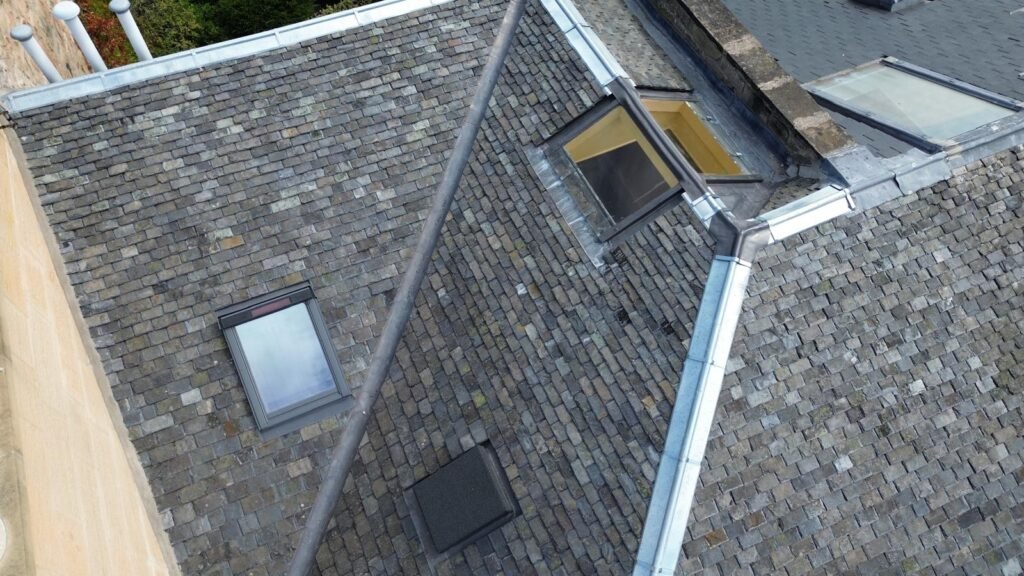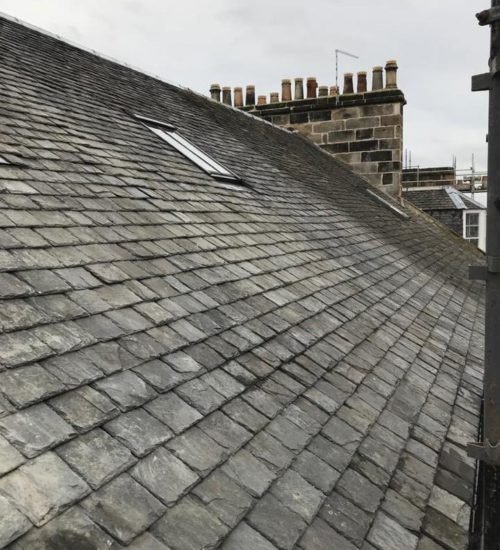
Storms are a regular part of life in Edinburgh, especially through autumn and winter. High winds, heavy rain, and freezing temperatures can all put pressure on your roof — and sometimes damage isn’t obvious from the ground. Knowing what to look for after bad weather can help you catch problems early and avoid more expensive repairs later.
1. Missing or Slipped Slates
Strong winds can lift or dislodge slates. Even one missing slate can allow water to get into the roof structure.
Look for:
- Gaps in slate rows
- Slates sitting at an angle
- Slates on the ground around your property
2. Damaged or Loose Leadwork
Leadwork protects key areas like chimneys, valleys, and roof joints. Storms can loosen or split older lead.
Watch for:
- Lifting lead edges
- Visible cracks or splits
- Water marks near chimneys inside the property
3. Blocked or Overflowing Gutters
Storm debris like leaves and moss can block gutters, causing water to back up under the roof edge.
Check for:
- Water spilling over gutter edges
- Sagging gutter sections
- Debris build-up
4. Internal Signs of Roof Problems
Sometimes the first sign of roof damage is inside your home.
Look for:
- Damp patches on ceilings
- Water staining near chimney breasts
- Peeling paint near roof lines
Why Storm Damage Shouldn’t Be Ignored
Small roofing issues can quickly become bigger problems, especially in Edinburgh’s wet climate. Water entering through a small gap can lead to timber damage, insulation problems, and internal damp.
When to Call a Roofer
If you notice anything unusual after a storm, it’s always best to get it checked sooner rather than later. Early repairs are usually quicker and more cost-effective.